Order Summary
No items in your bag. Let's Start Shopping!





Free Shipping - Hyperice
Free Shipping on Hyperice Products
That stiff, heavy feeling the day after a hard session is familiar to almost everyone who trains. If you're looking for how to reduce muscle soreness after workout, the goal is not to eliminate every bit of soreness. The goal is to recover well enough to move properly, train consistently, and avoid turning normal post-workout discomfort into a bigger setback.
Muscle soreness after exercise usually shows up 12 to 24 hours later and peaks around the 24 to 72 hour mark. This is often called delayed onset muscle soreness, or DOMS. It tends to be worse after new movements, higher training volume, or lots of eccentric loading like downhill running, lunges, or slow lowering phases in strength work. A good recovery plan can reduce the intensity, shorten the duration, and help you feel more capable between sessions.
Soreness is not caused by one single thing, and that matters because there is no one perfect fix. In most cases, it reflects small amounts of muscle damage, inflammation, fluid shifts, and nervous system fatigue after training stress. The body then adapts to that stress, which is part of how progress happens.
This is why soreness is not always a sign of a great workout, and a lack of soreness is not a sign that training failed. Chasing soreness can actually work against performance if it keeps you moving poorly or forces you to skip quality sessions. Recovery works best when it supports adaptation instead of trying to shut down every normal response to training.
The best approach is to combine a few proven strategies instead of relying on one trendy fix. Timing, training load, sleep, hydration, and the right recovery tools all matter. What works best also depends on the kind of soreness you have, how hard you trained, and how soon you need to perform again.
If you are dealing with general muscle soreness from a normal workout, start with circulation, light movement, and tissue support. If soreness is severe, sharply localized, or paired with swelling, bruising, weakness, or joint pain, that moves beyond standard DOMS and should be treated more cautiously.
One of the most effective ways to feel better is also the least glamorous. Light movement increases circulation, helps reduce stiffness, and often improves range of motion faster than complete rest. Easy cycling, walking, mobility work, and low-intensity swimming can all help the body clear metabolites and restore movement quality.
The key is dosage. A gentle recovery session can make you feel looser. Another hard workout on already damaged tissue can extend soreness and compromise form. If your legs are cooked from heavy squats, a relaxed spin or brisk walk usually makes more sense than another lower-body strength day.

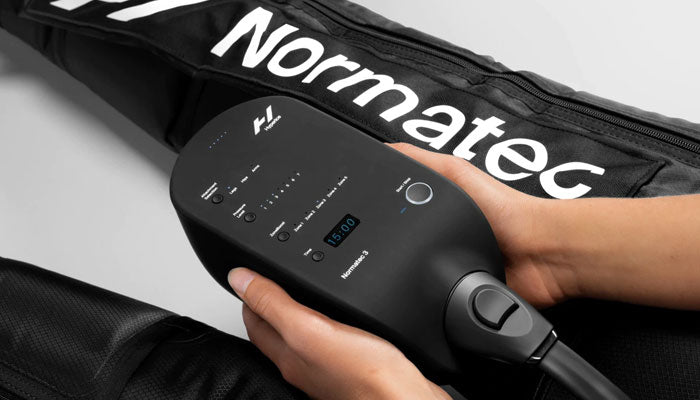
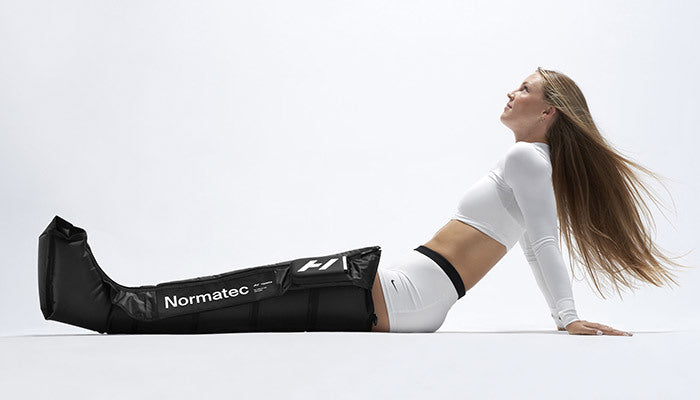
Compression can be especially useful when soreness comes with that dull, heavy sensation in the limbs. Dynamic compression systems are designed to support circulation and help reduce the feeling of fatigue after hard efforts. Many athletes find compression useful after running, hockey, cycling, and team training blocks where legs take a repeated beating.
This is one area where practical use matters more than hype. Compression is not magic, but it can help you feel fresher and less stiff, especially when paired with hydration and active recovery. For athletes training multiple times per week, that difference can be meaningful.

Cold therapy is a strong option when soreness comes with heat, swelling, or a high level of tissue irritation. Ice packs, cold water immersion, and targeted cold therapy can reduce pain and calm tissue stress after demanding sessions. This is particularly useful after contact sports, repeated sprint work, or long runs that leave joints and muscles feeling inflamed.
There is a trade-off, though. Aggressive cold exposure immediately after every strength workout may not always be ideal if your primary goal is maximizing long-term muscle adaptation. If the priority is short-term recovery for the next game, practice, or shift, cold can be a smart choice. If the priority is building strength and hypertrophy, it may be better used more selectively.
Heat and warmth are often better for muscles that feel tight, guarded, or chronically stiff rather than hot and irritated. A heating pad, warm bath, or localized heat can improve tissue extensibility and make mobility work more effective. For desk-bound workers who train hard in the evening, heat can be especially useful the next day when everything feels locked up.
If the area is visibly swollen or freshly aggravated, start more conservatively. Heat can feel great, but it is not always the right first move after a very intense session.
Foam rollers, massage balls, and percussion devices can all help reduce perceived soreness and improve short-term mobility. They do this partly by changing how tissues feel and how the nervous system responds to pressure and movement. That matters when you are trying to get through a warm-up without feeling like every step is a negotiation.
More pressure is not always better. Deep, aggressive work on already tender muscles can backfire. A short session focused on major muscle groups is usually enough. Think calves, quads, glutes, lats, and pecs depending on the training day.
Recovery is not built by gadgets alone. Sleep is where tissue repair, hormonal regulation, and nervous system recovery all get real support. If soreness keeps lingering for days, poor sleep is often part of the story.
For active adults, seven to nine hours is a strong target, but quality matters too. A consistent sleep schedule, a cooler room, and less late-night screen exposure can have a bigger impact on soreness than another supplement added at random. This is not flashy advice. It works anyway.
You do not need a complicated recovery stack to reduce soreness, but under-fuelling makes recovery harder. After a hard session, protein supports muscle repair and carbohydrates help replenish glycogen, especially after endurance or high-volume training. If you regularly finish workouts and then go hours without eating, soreness may hit harder and performance may dip sooner.
Hydration matters for circulation, temperature regulation, and muscle function. This is especially relevant in Canadian winters where dry indoor air can quietly increase fluid loss, and in summer training blocks where sweat losses climb fast. Electrolytes can help after long, sweaty sessions, but not every workout demands them.
Tart cherry, omega-3s, and magnesium get a lot of attention in recovery conversations. They may help some people, but they should be viewed as support, not the foundation. If sleep, food, and training load are off, small add-ons will not cover the gap.
The biggest mistake is stacking hard sessions without enough recovery between them. That can look like heavy lower-body lifting followed by hill sprints, then a long run, then a weekend game. Each session is reasonable on its own. Together, they can keep soreness elevated and raise injury risk.
Progressive training works because the body gets exposed to stress it can actually adapt to. If soreness is constant, very intense, or getting worse week after week, it may be a programming problem rather than a recovery problem. Better sequencing, slightly lower volume, or more gradual progression often solves what recovery tools alone cannot.
There is a clear difference between expected training soreness and something that needs attention. If pain is sharp, one-sided, associated with swelling, bruising, significant weakness, or altered mechanics, treat it differently. Severe symptoms, dark urine, or pain that does not improve should not be dismissed as normal DOMS.
For rehab patients and active adults returning from injury, soreness can be more complicated. The right recovery strategy depends on the tissue involved, the stage of healing, and whether the issue is muscular, tendinous, or joint-related. This is where a more targeted recovery setup makes sense.
The best recovery plan is one you can repeat. For most active Canadians, that means a short cooldown, enough protein and fluids after training, a bit of light movement the next day, and selective use of compression, cold, heat, or self-massage based on what the body is telling you. Recovery Room is built around that practical approach - matching the tool to the type of soreness, sport, and recovery goal.
You do not need to treat every sore muscle like an emergency. You do need to respect what soreness is telling you. Recover smart, keep the next session in mind, and your body will usually meet you there.